Blog

Are Mobile Phones Damaging Your Eyes? 7 Ways to Reduce Digital Eye Strain

Digital Eye Strain and Computer Vision Syndrome

From scrolling through Instagram to working on laptops all day, screens have become a part of our daily lives. But if your eyes feel tired, dry or blurry by evening, you may be experiencing digital eye strain, also called computer vision syndrome.

The good news? Screen-related discomfort can often be reduced with a few simple changes.

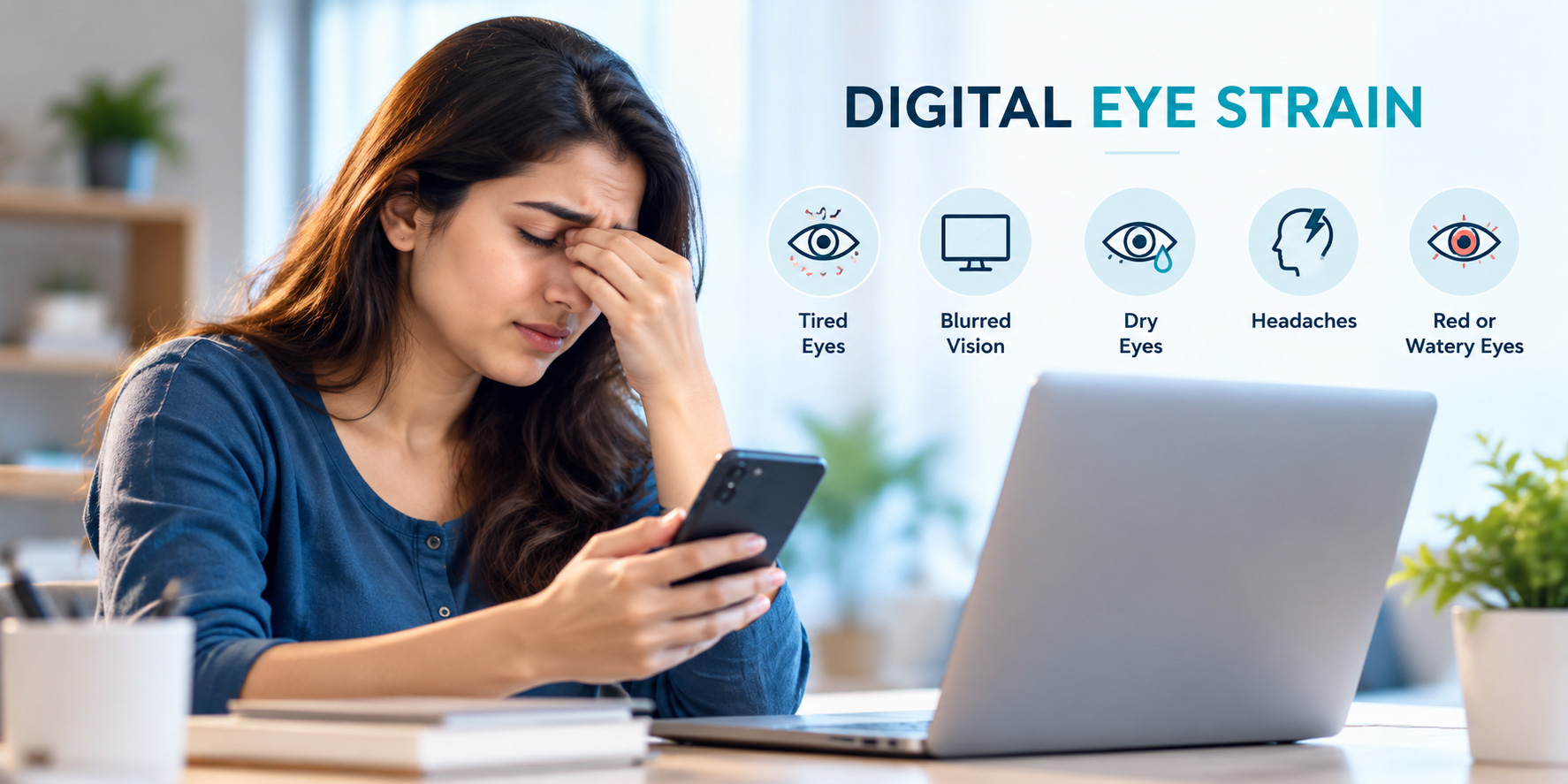
What are the symptoms of digital eye strain?

You may experience:

  • Burning, itching or dry eyes
  • Watery or red eyes
  • Blurred vision after prolonged screen use
  • Headaches or heaviness around the eyes
  • Difficulty focusing after looking at a screen for a long time

When we concentrate on screens, we tend to blink less frequently, allowing tears to evaporate more quickly.

Do mobile phones permanently damage your eyes?

Ordinary screen use has not been shown to cause permanent retinal damage from blue light emitted by digital devices. However, prolonged screen use can cause discomfort and may worsen existing dry eye symptoms.

7 ways to protect your eyes while using screens

  1. Follow the 20-20-20 rule: Every 20 minutes, look at something around 20 feet away for 20 seconds.
  2. Blink consciously: Blink regularly and completely.
  3. Maintain a comfortable distance: Keep a computer screen approximately an arm's length away.
  4. Adjust screen brightness: Set the brightness to suit your surroundings.
  5. Avoid direct airflow: Do not direct air conditioners or fans toward your eyes.
  6. Take contact lens breaks: Remove lenses if they worsen discomfort and follow your eye specialist's advice.
  7. Get your eyes examined: If symptoms persist, seek professional advice instead of repeatedly using random eye drops.

When should you consult an eye specialist?

Frequent headaches, persistent blurred vision, redness or burning may be due to dry eye disease, an incorrect glasses prescription or another eye condition.

At Dr. Poorva's Eye and Vision Centre, Goregaon West, Mumbai, an eye examination can help identify the cause of your discomfort and guide appropriate treatment.

Your eyes work hard every day. Give them the care they deserve.

Book an eye check-up if screen-related symptoms are affecting your comfort or daily routine.
LASIK, SMILE or ICL? Understanding Your Options for Spectacle Removal

Digital Eye Strain and Computer Vision Syndrome

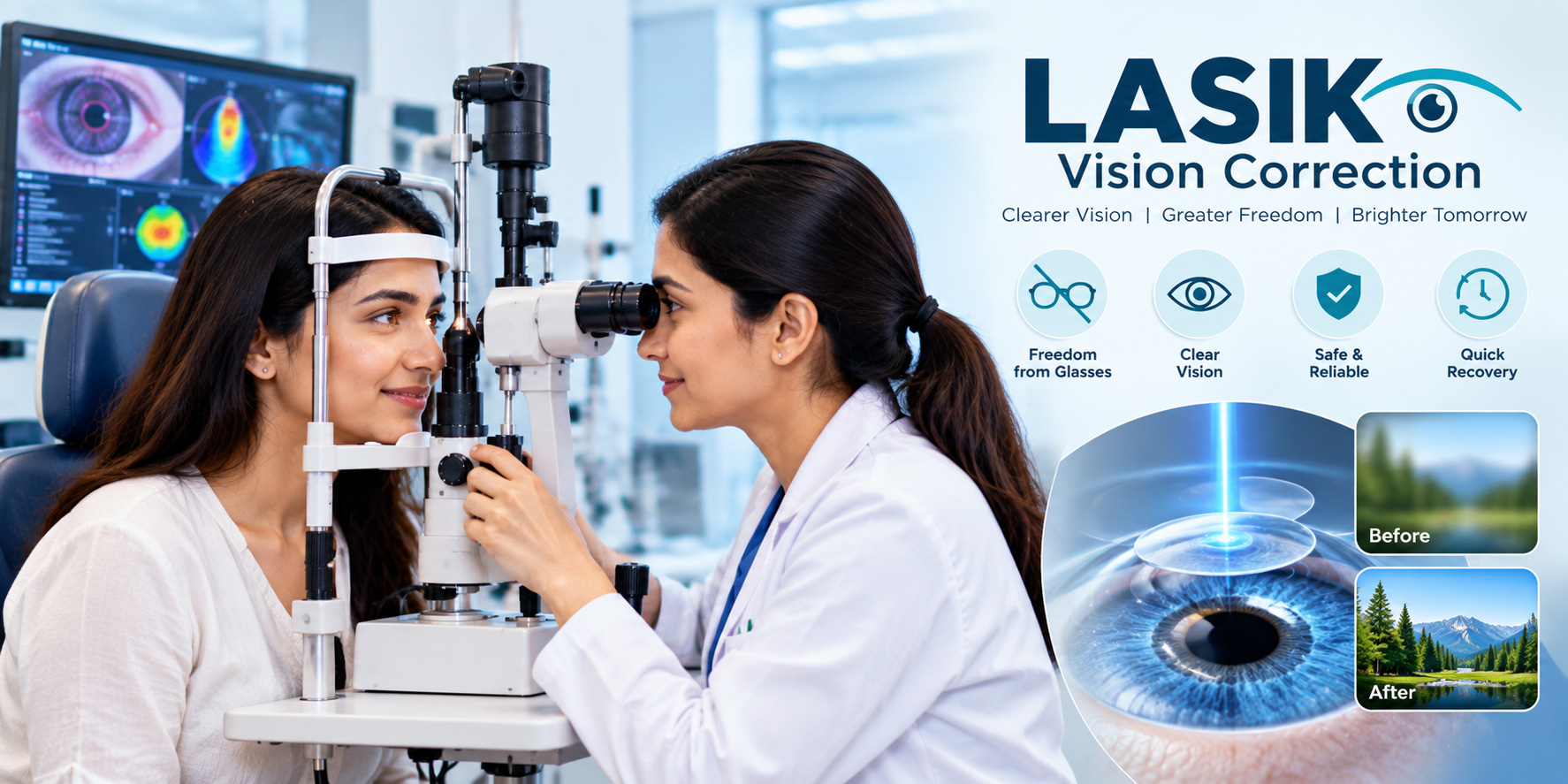
Tired of cleaning your spectacles, struggling with contact lenses or worrying about your glasses during sports? You may have considered laser vision correction.

But is LASIK the right choice for everyone? No. The best option depends on your prescription, corneal health, age and lifestyle.

What are your options for correcting spectacle power?

1. Glasses or contact lenses

These are non-surgical options that correct your vision without permanently changing the structure of your eye. They remain excellent choices for many people.

2. LASIK, SMILE and PRK

These procedures reshape the cornea to correct suitable refractive errors. The technique recommended depends on your eye measurements, prescription and individual suitability.

3. ICL surgery

An implantable collamer lens (ICL) is placed inside the eye to correct suitable prescriptions without removing corneal tissue. It may be considered for selected people, including some with high spectacle power.

Who is suitable for LASIK?

You may be considered if:

  • You are an appropriate age, generally at least 18 years old.
  • Your spectacle number has been stable.
  • Your cornea is healthy and has suitable thickness and shape.
  • You do not have certain conditions, such as keratoconus or significant untreated dry eye.

A high spectacle number does not automatically make you suitable for ICL, and a low number does not automatically make you suitable for LASIK. Detailed measurements are essential.

Does LASIK permanently remove glasses?

LASIK can significantly reduce dependence on glasses or contact lenses, but it cannot guarantee perfect vision for everyone or prevent age-related reading glasses.

Like any surgery, it has potential risks and limitations. These should be discussed before deciding.

What tests are needed before spectacle removal surgery?

Your assessment may include:

  • A detailed refraction test
  • Corneal mapping
  • Corneal thickness measurements
  • Tear-film evaluation
  • A general eye-health examination

At Dr. Poorva's Eye and Vision Centre, Goregaon West, Mumbai, an eye evaluation can help you understand which vision correction options may be appropriate for you.

Do not choose a procedure based only on a friend's experience or an online advertisement. Choose after understanding your own eyes.

Book a refractive surgery suitability assessment to discuss your options and make an informed decision.

Red Eyes, Itching or Watery Eyes? When Should You Worry?

Digital Eye Strain and Computer Vision Syndrome

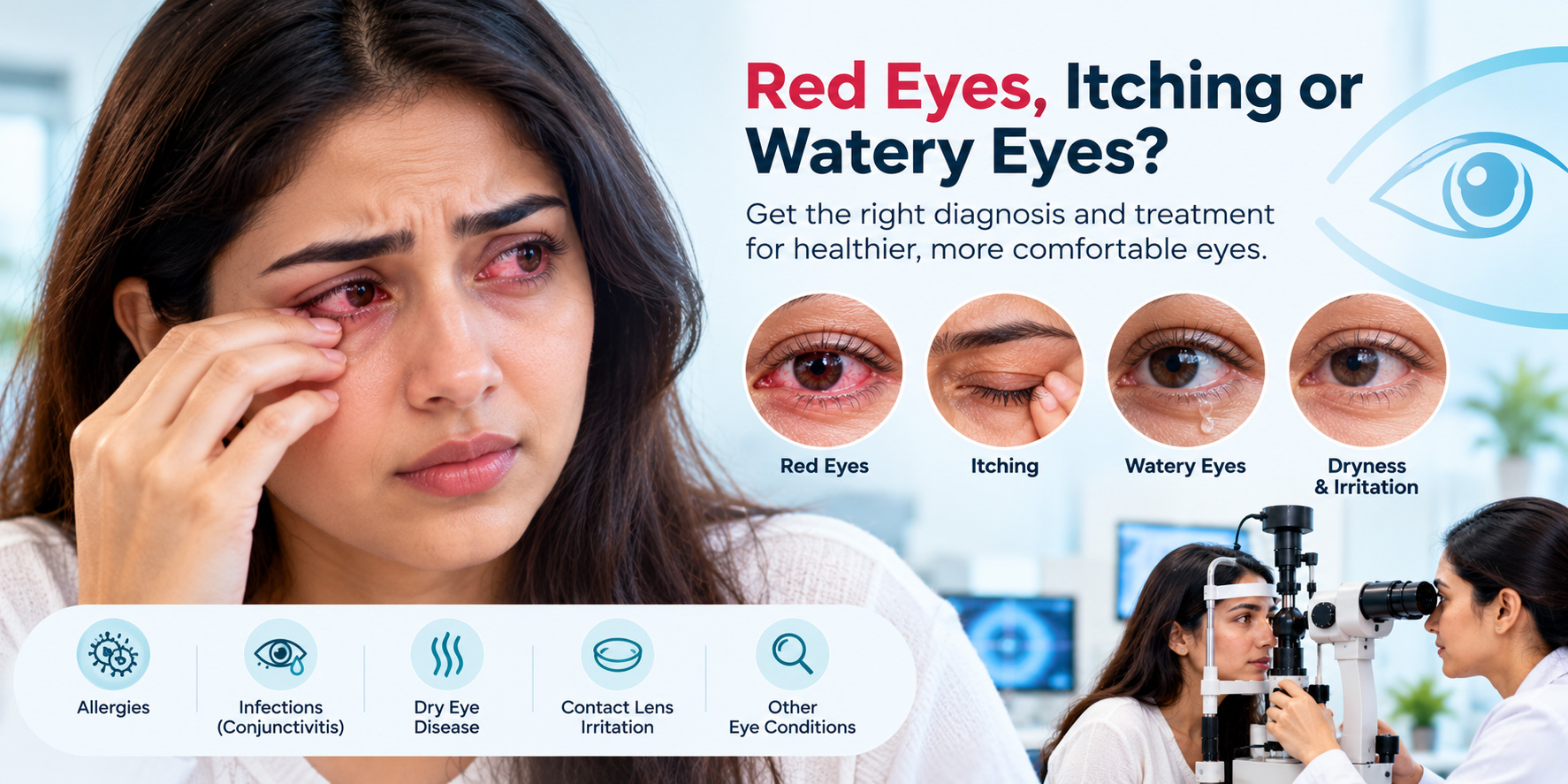
A red eye can be uncomfortable and worrying. Sometimes it is caused by something minor, such as dryness or an allergy. In other cases, it may indicate an infection or a more serious eye condition.

The important thing is to understand the cause rather than treating every red eye in the same way.

What causes red eyes?

Allergies: Usually cause itching, watering and redness, often in both eyes.

Conjunctivitis: Inflammation of the thin membrane covering the white of the eye. It may be caused by a virus, bacteria or allergy.

Dry eye disease: Can cause burning, irritation, redness and a gritty sensation.

Contact lens-related irritation: Incorrect use or poor lens hygiene can cause redness and potentially serious infections.

Other eye conditions: Inflammation inside the eye or a corneal problem can also cause redness.

Can you use any eye drops for red eyes?

No. The correct treatment depends on the cause.

Avoid using leftover antibiotic drops, steroid eye drops or combination drops without medical advice. Steroid eye drops can worsen certain infections and may increase eye pressure in susceptible individuals.

Do not share towels or eye cosmetics if an infection is suspected, and wash your hands frequently.

When should you see an eye specialist?

Seek urgent eye care if redness is accompanied by:

  • Eye pain or significant light sensitivity
  • Sudden or reduced vision
  • Severe headache, nausea or vomiting
  • A painful red eye while wearing contact lenses
  • A suspected chemical injury or penetrating injury

Do not wait for a routine appointment if these symptoms occur. Chemical eye exposure requires immediate flushing with clean, lukewarm running water while arranging emergency medical care.

The right treatment starts with the right diagnosis

Redness alone cannot tell you whether you have an allergy, infection, dry eye or another condition. An eye examination helps identify the cause and avoid inappropriate treatment.

At Dr. Poorva's Eye and Vision Centre, Goregaon West, Mumbai, you can seek an assessment for persistent redness, itching, watering and other eye complaints.

Your eyes deserve the right treatment, not guesswork.

Book an eye consultation if your symptoms persist, recur or concern you.